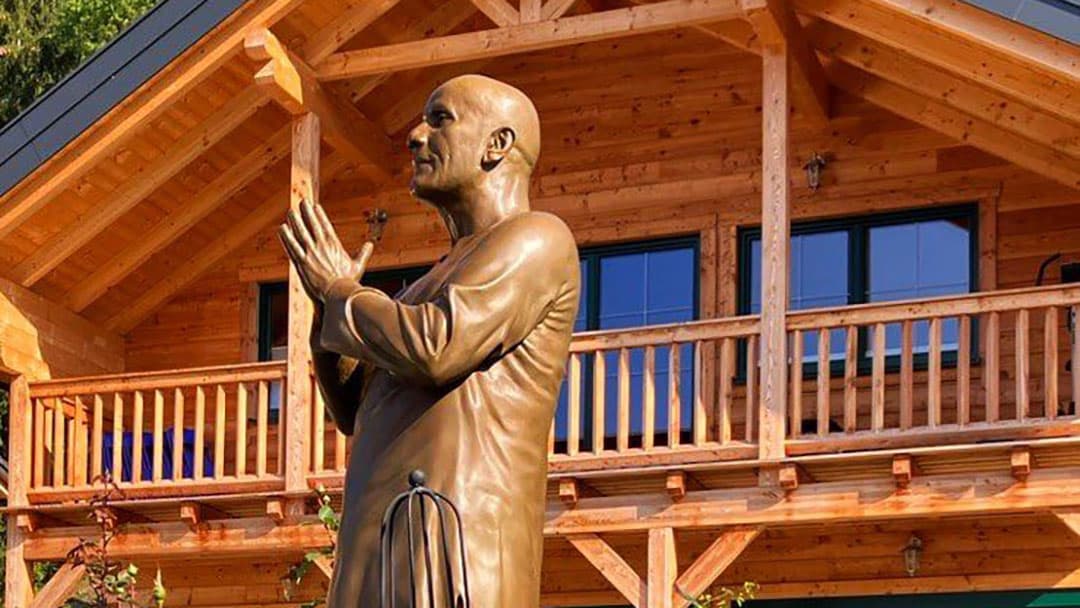
O My Heart #36: Sri Chinmoy Songs sung by Tanima

Welcome to this series sharing four beautiful songs from Sri Chinmoy’s “O My Heart” collection. Sri Chinmoy wrote thousands of heartfelt songs full of hope, thanks, and inner light. They’re simple melodies that speak straight to your heart, helping you feel calm, peaceful, and a little brighter – whether you’re meditating, relaxing, or just going about your day.

These songs from “O My Heart” carry that gentle, uplifting feeling. Tanima, a longtime student of Sri Chinmoy and one of the early singers in his community, performs them here with real warmth and care. Her gentle, soulful voice makes each song feel alive and easy to connect with.

You can just listen quietly, hum along, or let the melodies play softly in the background — they bring a soft, happy lift to your day.

Featured this time:

Songs

  • Chalo… Kathati Na Kabhu Balo Sudur
  • Chanchala Man Dure Rakhi
  • Chalbo Ami Parama Pita
  • Chalo Jai Chalo Jai Chalo Jai

Listen & Learn

You can learn by watching the notation while listening, follow along with the melody, or download both the audio and the PDF scores for your personal practice. Everything is available for free, so you can learn at your own pace and enjoy the music more deeply. Use the links below to easily listen to the audio, download the recordings, and view or download the PDF sheet music for your convenience:


Lyrics:

1. Chalo… Kathati Na Kabhu Balo Sudur

Chalo chalo chalo chalo
Kathati na kabhu balo
Sudur desher udar madhur
Sangit suru halo
Jyoti saranir shankha
Nashibe malin panka
Param kanti charam shanti
Phule phale dekha dilo
Rupantarer dak shune aj
Dyulok bhulok abhinna haye gelo

Composed on April, 1983
– Sri Chinmoy, ‘Journey’s Ecstasy’ songbook


2. Chanchala Man Dure Rakhi

Chanchala man dure rakhi
Chanchala mor man

Translation:

I keep aside my restless mind;
Always I keep it aside.

Composed on 1977
– Sri Chinmoy, ‘Journey’s Goal, Part 10a’ songbook


3. Chalbo Ami Parama Pita

Chalbo ami parama pita tomari sathe
Samarpaner giti geye dibasa rate

Translation:

O my Beloved Father Supreme,
Singing the song of my constant self-offering,
All day and night
I shall walk along with You.

Composed on January 26, 1978
– Sri Chinmoy, ‘Journey’s Goal, Part 9b’ songbook


4. Chalo Jai Chalo Jai Chalo Jai

Chalo jai chalo jai chalo jai
Hetha nai hetha nai hetha nai
Asha hasi aradhana prema sudha
Aloker asimer puta khudha
Chalo jai chalo jai chalo jai
Hetha nai hetha nai hetha nai
Amader bidhatar tari banshi
Achhe shudhu bhul giri rashi rashi
Nahi pabo hetha kabhu jaha chai

Translation:

Let us go.
Here there is no hope, there is no smile,
     no adoration,
No divine love, no nectar, no hallowed
     hunger for the Light of the Infinite.
Let us go, let us go.
Here there is no boat, no flute of our
     Supreme Lord.
Here there is only a chain of falsehood
     mountains.
Whatever you want, you shall never get it here.
Let us go, let us go.

Composed on December 17, 1972
– Sri Chinmoy, ‘Garden of Love-Light, part 2’ songbook


For more of Sri Chinmoy’s published songs, visit the official website: www.srichinmoysongs.com.
To learn more about Sri Chinmoy, please visit: www.srichinmoy.org.

© 2026 Sri Chinmoy Centre

Video #362: Invitation to Jharna-Kala Fountain Art Exhibition in Prague

Introduction to the Invitation

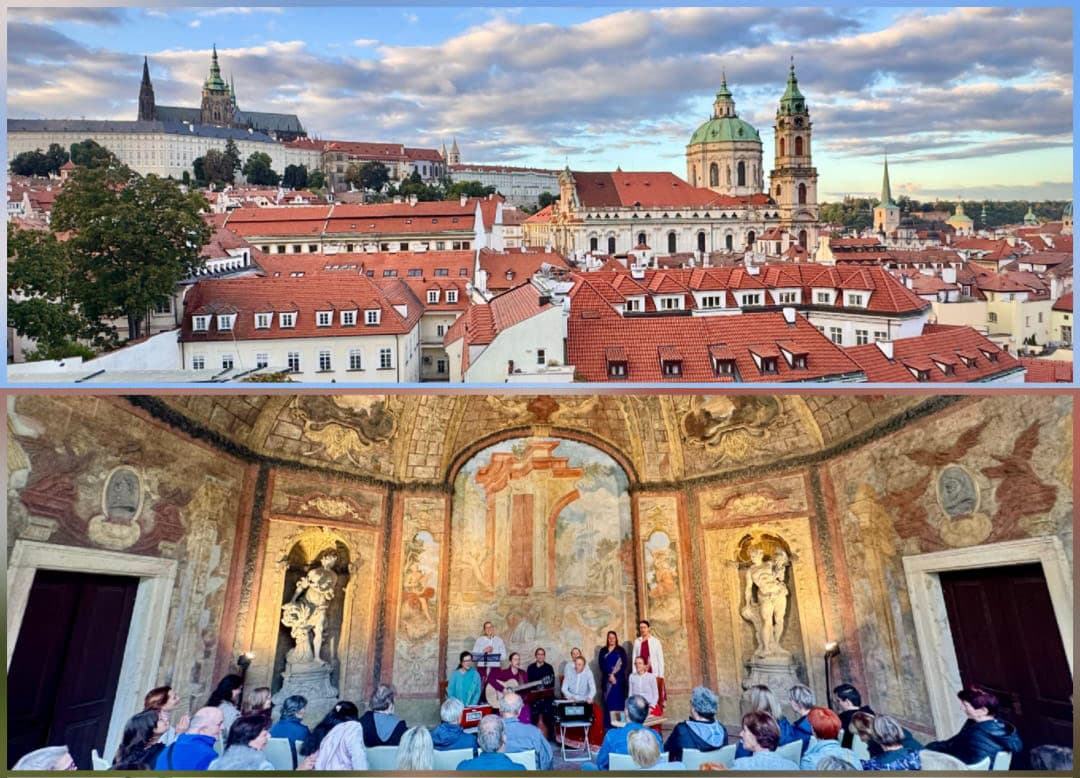
This video is a warm official invitation to the exhibition Jharna-Kala Fountain Art by Sri Chinmoy, taking place from 1 to 30 September 2026 in one of Prague’s most beautiful Baroque gardens. Step into the UNESCO-listed Vrtba Garden (Vrtbovská zahrada) at Karmelitská 25, Prague 1 – Malá Strana, and discover art that speaks directly to the heart. The exhibition offers a quiet oasis of peace in the middle of the city and a chance to pause, slow down and enjoy beauty born of meditation.

What Is Jharna-Kala – Fountain Art?

Sri Chinmoy (1931–2007) was a globally respected humanitarian, philosopher, musician and artist who was nominated for the Nobel Peace Prize for his lifelong dedication to peace. He called his artwork Jharna-Kala, meaning “Fountain Art.” This art does not arise from intellectual self-expression, nor does it belong to any particular artistic movement. Instead, it flows spontaneously from the profound inner silence of meditation. Each work carries a living quality of peace, light and upliftment that can be felt by the viewer.

Exhibition Details

  • Dates: 1–30 September 2026
  • Venue: Sala Terrena Gallery Exhibition | Vrtba Garden (UNESCO)
  • Address: Karmelitská 25, Prague 1 – Malá Strana
  • Official website: artforpeace.cz/en

Highlights of the Exhibition

The exhibition features several rare and meaningful collections:

  • The World Harmony series, originally shown at the United Nations
  • A new selection of Messages for Humanity
  • A rare set of Chinese Scrolls displayed to the public for the very first time
  • An exclusive outdoor presentation of originals from the Dream-Freedom-Peace-Birds collection, previously exhibited at the Carrousel du Louvre in Paris

These Peace Birds, placed in the garden itself, beautifully symbolise the soul and carry an uplifting feeling of inner freedom.

Under the Patronage of Maestro Debashish Chaudhuri

The exhibition is held under the gracious honorary patronage of the distinguished Indian conductor Maestro Debashish Chaudhuri. In today’s turbulent times, the organisers wish to build a bridge of inner peace and unity, echoing the timeless universal message of Vasudhaiva Kutumbakam — “The World Is One Family.”

A Unique Artistic Voice

Martin Kemp, Professor of the History of Art at the University of Oxford and a leading international expert on Leonardo da Vinci, has said of Sri Chinmoy’s work:

“His art is extraordinary and unique. It is unlike anything I have ever seen.”

This recognition from one of the world’s foremost art historians underlines the special quality of Jharna-Kala Fountain Art. It stands outside conventional categories and speaks directly to the heart.

Why Visit This Exhibition

In a busy city, an exhibition that invites visitors to slow down and experience peace is a precious gift. The combination of Sri Chinmoy’s spontaneously created artworks and the serene Baroque setting of the Vrtba Garden creates a rare atmosphere. Whether you come for the beauty of the garden, the uniqueness of the art, or simply to find a quiet moment, the exhibition offers something deeply nourishing.

Previous Presentations of Jharna-Kala

Sri Chinmoy’s artwork has been exhibited in many prestigious venues around the world, including the United Nations, the Carrousel du Louvre in Paris, and galleries across Europe, Asia and America. Each exhibition carries the same core message: that art born of meditation can become a silent ambassador of peace and oneness.

Final Invitation

We warmly invite you to visit the Jharna-Kala Fountain Art exhibition in Prague this September. Let the video invitation inspire you, and then come and experience the art in person. In the quiet of the Vrtba Garden, surrounded by works that flow from inner silence, you may discover a moment of real peace.

Explore More

For more information about Sri Chinmoy Art, visit the official website: www.srichinmoyart.org.
To learn more about Sri Chinmoy, please visit: www.srichinmoy.org.

Video #361: Spiritual Growth Signs | Spirit Matters #44

Introduction to Spiritual Growth Signs

Your spiritual awakening is only the beginning. Without clear signs that you are actually growing, it is easy to wonder whether your meditation practice is making any real difference. In this episode of Spirit Matters, Abhinabha and Vajin unpack seven practical Spiritual Growth Signs that appear in daily life — not just in books or peak experiences. If you do not have a spiritual teacher guiding you directly, this conversation offers honest, grounded wisdom to help you know whether you are on the right track.

Why Spiritual Progress Needs Clear Markers

Many seekers feel stuck or uncertain after an awakening experience. The mind keeps saying nothing is happening, while subtle but important changes are already taking place. Real spiritual growth is not measured by how many hours you sit in meditation or how elevated you feel during peak moments. It is measured by how you react, how you treat others, and how much lighter your inner world becomes over time. This episode focuses on those lived, practical signs.

Sign 1: Breaking the Autopilot Loop

One of the clearest Spiritual Growth Signs is the ability to interrupt automatic reactions. Instead of living on autopilot and repeating the same emotional patterns for years, you begin to notice the moment of choice. This is where your future stops repeating your past. The tiny pause between stimulus and response becomes a doorway to freedom. Without this pause, we continue throwing emotional grenades we never intended to throw.

Sign 2: Dropping the Dead Weight of Negativity

As real growth begins, jealousy, chronic worry and fear start to lose their grip. They do not disappear overnight, but their intensity softens. You find yourself carrying less emotional weight. This lightening of the inner load is one of the most reliable indicators that consciousness is expanding. The episode explores how this process unfolds naturally when the spiritual life is lived sincerely.

Sign 3: Choosing Your Response

Spiritual progress shows itself in the capacity to choose rather than react. You begin to catch yourself before speaking words you will later regret. This ability to pause and respond from a calmer place protects relationships, preserves peace of mind, and builds quiet self-respect. Over time, these small choices rewrite the personality itself.

Sign 4: The Return of Freshness to Ordinary Days

When spiritual growth is alive, ordinary days start to feel new again. The world looks fresher, more alive, more interesting. Losing this sense of newness is often the first quiet warning that the inner life is beginning to dry out. The hosts discuss why travel sometimes feels spiritual and how the same quality of freshness can be cultivated at home through a living practice.

Sign 5: Taking Radical Responsibility

A major shift occurs when we stop blaming others and reclaim authorship of our own lives. Victimhood gives way to agency. Instead of feeling trapped in a story written by someone else, we begin creating a more beautiful present — and therefore a more beautiful past. This willingness to take full responsibility is both challenging and liberating.

Sign 6: Becoming Less Impulsive

Another clear sign is a growing ability to interrupt the chain of reaction. Old patterns become visible. You see the same old personality habits rising, and you choose differently. These repeated small choices gradually reshape who you are. The episode offers practical insight into how this process works in ordinary conversations and daily decisions.

Sign 7: Faith Moving from the Soul into the Mind

One of the most beautiful Spiritual Growth Signs is the quiet increase of faith. Doubt loses its dominance. Faith that once lived only as a deep soul feeling begins to settle into the mind. The inner life gains more room to breathe. This does not mean the end of questions, but it does mean that questions no longer control the atmosphere of the heart.

The Balance Scale of Consciousness

Throughout the conversation, Abhinabha and Vajin return to a helpful image: the balance scale of consciousness. On one side is the desire life; on the other, the aspiration life. Real progress is felt when the scale slowly tips toward aspiration — when the pull of the soul becomes stronger than the pull of old habits and fears.

Testing Spirituality in the Real World

True growth is tested not in the meditation room alone, but in the marketplace of daily life. How do we respond when someone criticises us? How do we handle disappointment or delay? The episode emphasises that spirituality, which cannot survive ordinary human friction is still incomplete. Real progress requires getting our hands dirty in the world while keeping the heart clean.

Happiness as a Reliable Indicator

Sri Chinmoy taught that progress is happiness. The hosts explore what this means in practice. Outer pleasure comes and goes, but a quieter, more stable inner joy begins to appear as consciousness expands. Even when outer circumstances remain difficult, this deeper happiness can be felt as a background presence.

Previous Episodes in the Spirit Matters Series

This episode continues the rich tradition of practical spirituality offered by Spirit Matters. Explore more transformative conversations:

Final Reflections

Spiritual growth is often quieter and more ordinary than we expect. It shows up in the ability to pause, in the lightening of old emotional burdens, in the return of freshness to daily life, and in a slowly deepening faith. This episode of Spirit Matters offers a clear and compassionate map of these changes. For anyone who has wondered whether their practice is actually working, these seven Spiritual Growth Signs can serve as honest and encouraging companions on the path.

Explore More 

For more information about events, visit the official website: www.srichinmoycentre.org.
To learn more about Sri Chinmoy, please visit: www.srichinmoy.org.
I Love Singing #267: Sri Chinmoy Songs sung by Purnakama

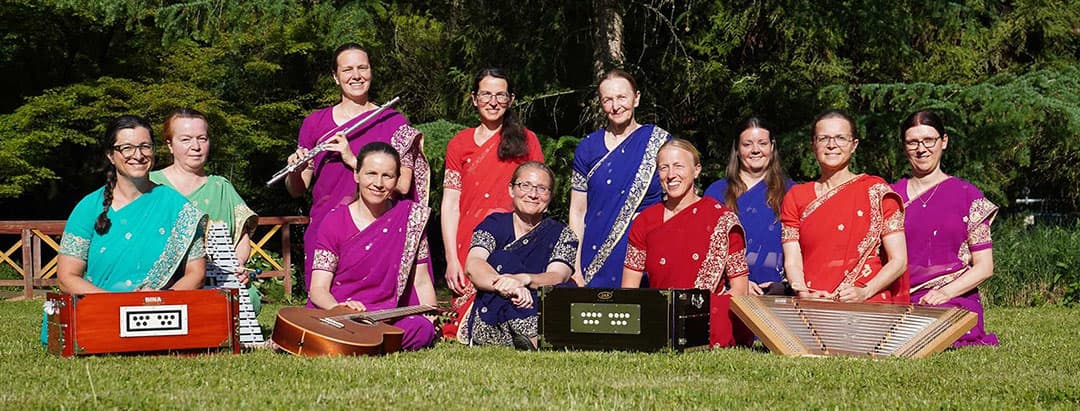
This week features four uplifting Sri Chinmoy Bengali and English songs from the ‘Your Face Is My Dream’ songbook. Over the years, Sri Chinmoy composed music filled with aspiration and gratitude, creating heartfelt melodies that gently illuminate his spiritual path. Because of their simplicity and warmth, the songs continue to speak directly to the inner heart. Additionally, they offer listeners a peaceful doorway into his meditative world.

The performances this week come from his disciple Purnakama, whose sincere and gentle voice brings out the devotional sweetness in every line. Through her recordings, it becomes easy to settle into a calm, meditative mood and appreciate the purity of the music. As a result, whether you choose to sing along or simply listen quietly, these Sri Chinmoy Bengali and English songs can add a soft, elevating joy to your week.

Below are the six songs featured in this week’s selection:

Songs

  • Jukta Hale Mukta Habo
  • Liberated We Shall Be
  • Nahi Jani Kahar Lagi
  • I Know Not For Whom I Cry

Listen & Learn

You can learn by watching the notation while listening, follow along with the melody, or download both the audio and the PDF scores for your personal practice. Everything is available for free, so you can learn at your own pace and enjoy the music more deeply. Use the links below to easily listen to the audio, download the recordings, and view or download the PDF sheet music for your convenience:


Lyrics:

1. Jukta Hale Mukta Habo

Jukta hale mukta habo
Satya e je maha satya

Translation:

Liberated we shall be
If we are united.
This truth is the Truth supreme.

Composed on August 10th, 1989
– Sri Chinmoy, ‘Your Face Is My Dream’ songbook


2. Liberated We Shall Be

Liberated we shall be
If we are united.
This truth is the Truth supreme.

Composed on August 11th, 1989
– Sri Chinmoy, ‘Your Face Is My Dream’ songbook


3. Nahi Jani Kahar Lagi

Nahi jani kahar lagi
Kandi ami kahar lagi hasi

Translation:

I know not for whom I cry,
For whom I smile.

Composed on August 11th, 1989
– Sri Chinmoy, ‘Your Face Is My Dream’ songbook


4. I Know Not For Whom I Cry

I know not for whom I cry
For whom I smile.

Composed on August 11th, 1989
– Sri Chinmoy, ‘Your Face Is My Dream’ songbook


For more of Sri Chinmoy’s published songs, visit the official website: www.srichinmoysongs.com.
To learn more about Sri Chinmoy, please visit: www.srichinmoy.org.
© 2026 Sri Chinmoy Centre

Inspiring News #138: New World of Peace Concert at Skirball Center, New York

A New World of Peace 2026 Tour - NYC

A Special Evening of Music and Peace

On Tuesday, August 25, at 7:30 pm, something quietly beautiful took place at the Skirball Center for the Performing Arts on LaGuardia Place in New York. The concert A New World of Peace brought Sri Chinmoy’s music and poetry to life in a way that felt both intimate and expansive. For those who were there, it was more than a performance — it was a gentle invitation to pause, breathe, and remember the possibility of a more peaceful world.

What Is “A New World of Peace”?

A New World of Peace is a carefully crafted presentation of Sri Chinmoy’s songs and writings, arranged and conducted by Sahadeva Torpy. It is not a typical concert. The music moves slowly and deeply, weaving together moments of quiet intensity with passages of quiet joy. Poetry is spoken, instruments speak, and silence itself becomes part of the experience. The official website describes it as “a sacred journey,” and that feels exactly right.

Links and Further Listening

Music That Speaks to the Heart

Sri Chinmoy composed thousands of songs during his lifetime. Many of them carry simple, luminous messages about peace, gratitude, love, and the longing for a better world. In this concert, those songs are given new life through the voices and instruments of an international ensemble. Musicians from different countries come together under Sahadeva’s direction, creating a sound that feels both universal and personal.

You can feel the care that has gone into every arrangement. You can sense the sincerity of the performers. And somehow, in that atmosphere, the idea of a “new world of peace” stops feeling like an abstract ideal and starts feeling possible.

An Ideal Venue in the Heart of New York

The Skirball Center for the Performing Arts, right next to Washington Square, proved to be a wonderful home for the evening. The hall has a warm, welcoming quality. Its acoustics allow the softer moments of the music to carry clearly, while still giving space for the fuller, more expansive passages. Being in the middle of New York City — with all its energy and movement — made the quiet atmosphere inside the hall feel even more special.

Themes That Stay With You

Throughout the programme, certain themes returned again and again: the beauty of Mother Earth, the longing for oneness, the quiet strength of peace. Sri Chinmoy once said that the seed of peace must first be sown in the heart. This concert felt like a gentle watering of that seed. Many people left the hall carrying a little more stillness than they arrived with — and that, perhaps, is the real success of an evening like this.

Continuing a Living Tradition

Between 1984 and 2007, Sri Chinmoy himself offered 777 public peace concerts around the world. After his passing, dedicated musicians have continued to share his music in new and creative ways. A New World of Peace is one of the most thoughtful and beautiful of these offerings. It keeps the spirit of those original peace concerts alive while speaking in a language that feels fresh and relevant today.

A Quiet Gift to the City

In a city as busy and intense as New York, an evening devoted entirely to peace and inner reflection feels like a quiet gift. The August 25 performance of A New World of Peace offered exactly that. It reminded everyone present that music can still open doors that words alone cannot, and that the longing for a more harmonious world is alive and well in many hearts.

Looking Ahead

As the ensemble continues to share this programme in different cities, more people will have the chance to experience it. Each performance is slightly different, shaped by the musicians present and the atmosphere of the hall. Yet the core remains the same: a sincere offering of Sri Chinmoy’s vision of peace through the universal language of music.

Final Thoughts

The concert at the Skirball Center on August 25 was a simple, sincere, and deeply moving evening. It did not try to impress with volume or spectacle. Instead, it invited the audience into a quieter space — a space where the heart could listen, and where the possibility of a new world of peace felt close and real. For those who were able to attend, it was a gift that lingered long after the final notes had faded.

Explore More 

For more information about events, visit the official website: www.srichinmoycentre.org.
To learn more about Sri Chinmoy, please visit: www.srichinmoy.org.