News #96: Sri Chinmoy Centre at Gracie Mansion Diwali 2025, New York

Sri Chinmoy Centre Joins Diwali Celebration at Historic Gracie Mansion

A Night of Light, Music, and Unity

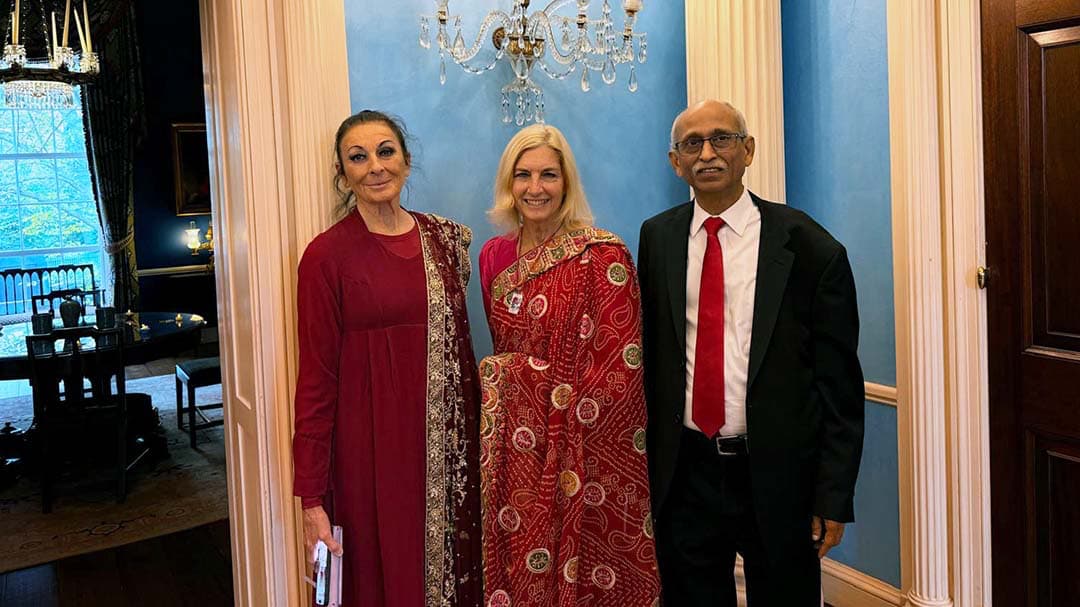
The Sri Chinmoy Centre joined a radiant Diwali celebration at Gracie Mansion on October 18, 2025. The evening brought together community leaders, artists, and cultural organizations for a night full of light, music, and shared joy. With glowing lamps, festive décor, and the warm energy of attendees, the mansion became a true stage for celebration.

Among the highlights was a performance by renowned sarangi musician Ustad Kamal Sabri. His music added soul and depth to the evening, inspiring everyone present. Guests also shared Diwali greetings and spoke about peace, unity, and community connection. The Sri Chinmoy Centre took part in the evening, joining others in the celebration of light, music, and community.

Media coverage by ITV Gold ensured that the event reached a wider audience. Interviews captured the atmosphere and allowed members of the Centre to express warm wishes for the festival. The celebration was more than entertainment — it demonstrated the beauty of harmony across cultures, faiths, and generations.
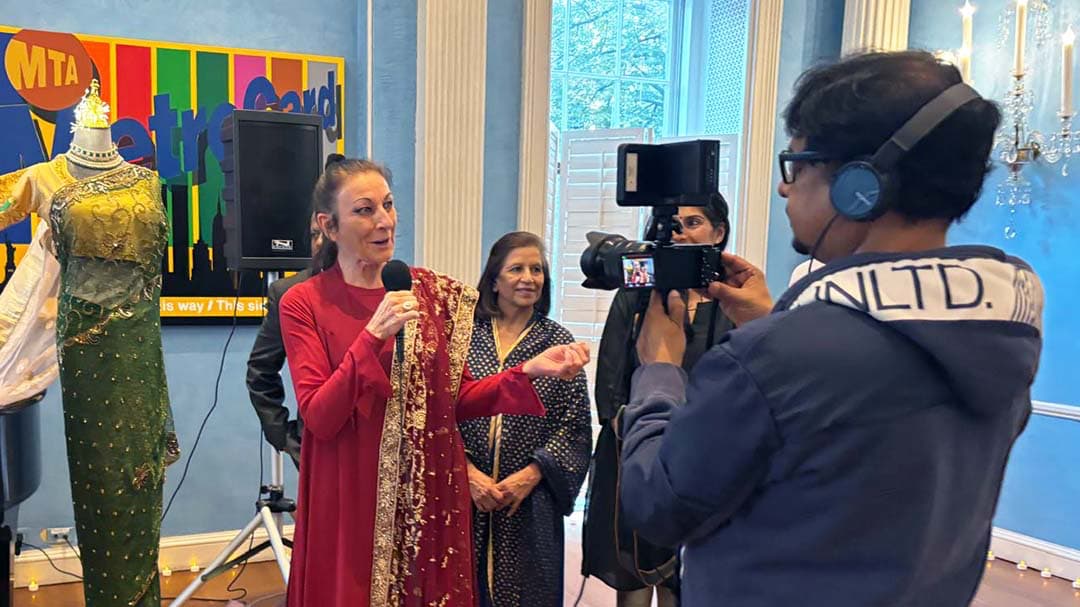
The occasion was covered by ITV Gold


Who Was Sri Chinmoy — In Short

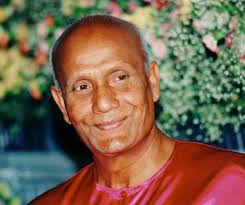
Sri Chinmoy (1931–2007) was a spiritual teacher, poet, artist, and musicianSri Chinmoy (1931–2007) was a spiritual teacher, poet, artist, and musician. After moving to New York in 1964, he devoted his life to guiding people toward inner peace, self-transcendence, and universal oneness. Over his lifetime, he created nearly 1,600 books, including poetry, essays, lectures, stories, and plays, and produced a vast collection of spiritual art and meditations.

Through his works, Sri Chinmoy encouraged seekers to look beyond surface-level differences and recognize the shared divine essence in all beings. His vision was global: he believed that inner peace leads to outer harmony and that every gesture — no matter how small — can contribute to universal love. The Centre’s Diwali celebration embodied this vision by sharing light, music, and goodwill in a civic space, bringing spiritual ideals into everyday life.

Light is the Creator yet to be fulfilled.
Light is the Creation yet to be realised.
Light is the Voice of Silence in the inner world.
Light is the fruit of action in the outer world.

– Sri Chinmoy, My Ivy League Leaves


Why This Evening Mattered

Diwali, the festival of lights, celebrates light over darkness, knowledge over ignorance, and hope over despair. These themes are universal. The event naturally highlighted the values of Diwali, and the Sri Chinmoy Centre joined the celebration warmly, simply enjoying the evening alongside other honored guests. 

The event showed that spirituality, culture, and community are not separate; they are intertwined in our shared human experience. Music, tradition, and fellowship created a space where compassion and unity were tangible. Attendees left with a sense of belonging and hope, reminded that light — both inner and outer — brings people together.

Ultimately, the evening carried a quiet sense of Sri Chinmoy’s teachings, felt more than spoken. It reminded participants that spiritual ideals are alive in every sincere smile, greeting, and act of kindness. By fostering connection across boundaries, the Diwali celebration became a celebration not only of light but also of human unity and shared purpose.


Learn More

For more information about events, visit the official website: www.srichinmoycentre.org.
To learn more about Sri Chinmoy, please visit: www.srichinmoy.org.

Video #315: What We Learn From Failure | The Acceptance of Life Podcast, Episode 24

In this episode, Abhinabha and Vajin delve into the spiritual perspectives on success and failure, exploring how both are essential for personal growth. They discuss the cultural obsession with material success, the importance of redefining success, and the necessity of failure in the journey of life. Through various anecdotes and philosophical insights, they emphasize the value of mindfulness, presence, and the inner journey towards fulfillment. The conversation culminates in the understanding that true success lies in the quality of our experiences and the courage to embrace life’s challenges.

Takeaways:

  • Success and failure are both necessary for spiritual growth.
  • Cultural definitions of success can be limiting.
  • True failure occurs only when we stop trying.
  • Mindfulness helps us stay present and aware.
  • Quality in our actions leads to fulfillment.
  • The journey is more important than the outcome.
  • We must learn to embrace both success and failure.
  • Inner peace is a true measure of success.
  • Every experience contributes to our growth.

For more information about events, visit the official website: www.srichinmoycentre.org.
To learn more about Sri Chinmoy, please visit: www.srichinmoy.org.

  •  

Video #312: Exploring the Nature of the Mind | The Acceptance of Life Podcast, Episode 23

In this enlightening discussion, Vajin and Abhinabha explore the intricate nature of the mind, its connection to consciousness, and the spiritual practices that can transform our mental states. They delve into the concept of free will versus determinism, emphasizing the importance of personal effort and divine grace in achieving spiritual growth.

Takeaways: 

  • The mind is a complex surface of deeper realities.
  • Spiritual practices can transform mental states.
  • Free will and determinism coexist in our lives.
  • Personal effort is essential for spiritual growth.
  • Divine grace complements personal effort.
  • The heart connects us to higher realities.
  • Thoughts often originate from external sources.
  • Meditation quiets the mind for a deeper connection.
  • Past actions don’t define future possibilities.
  • Identifying with the higher self leads to transformation.

For more information about events, visit the official website: www.srichinmoycentre.org.
To learn more about Sri Chinmoy, please visit: www.srichinmoy.org.

Video #302: Meditation’s ripple effects and how to change the world | The Acceptance of Life Podcast, Episode 20

In this episode, Abhinabha and Vajin explore the profound effects of meditation and intention on both personal development and the world at large. Through various examples and studies, they illustrate how individual consciousness can ripple out to create positive change in the world. Research has shown that collective meditation can end wars and conflicts and bring about permanent change and improvements on a global scale. They also discuss the nature of the world as a manifestation of collective consciousness, the transformative power of meditation, and the importance of mindfulness in daily life, emphasizing the need for a spiritual approach to life that focuses on being present and aware.

Takeaways:

  • The world is a manifestation of collective consciousness.
  • Meditation not only benefits the individual but also has a measurable impact on the world.
  • Intention can influence reality and create positive change.
  • Spiritual experiences are unique and cannot be forced.
  • Mindfulness enhances our daily experiences and brings joy to simple tasks.
  • Being present allows us to appreciate the beauty in our surroundings.
  • Collective meditation can create a powerful vibration for peace.
  • Spirituality is a different type of experience that transcends ordinary life.
  • We have the power to affect the world around us through our consciousness.
  • Every moment spent in awareness is valuable and transformative.

For more information about events, visit the official website: www.srichinmoycentre.org.
To learn more about Sri Chinmoy, please visit: www.srichinmoy.org.

Video #291: Seeing the good in others: a philosophy for the next 1000 years | The Acceptance of Life, Ep.16

Abhinabha and Vajin discuss the philosophy for the new millennium as articulated by Sri Chinmoy. They explore the unprecedented rate of change in the modern world, the importance of oneness and world peace, and the role of happiness and service in achieving a fulfilling life. The conversation delves into the significance of the new millennium, the stories that shape human experience, and the need for a collective consciousness that aims for harmony and unity among all beings. In this conversation, Abhinabha and Vajin explore the evolution of consciousness, the significance of the multiverse theory, and the impact of historical revolutions on human development. They discuss the cognitive revolution, the agricultural revolution, and the role of great spiritual teachers throughout history. The dialogue emphasizes the importance of community, acceptance, and the shift from a judgmental mindset to one of love and understanding in the new millennium. They highlight the need for a deeper connection with the heart and the transformative power of spirituality in modern life.

Takeaways:

  • The philosophy for the new millennium emphasizes seeing the good in others.
  • Rapid changes in technology and society create new challenges for humanity.
  • Oneness is recognizing our shared consciousness despite our differences.
  • Happiness should not be the goal; living a good life is paramount.
  • Pessimistic predictions often distract from positive action and growth.
  • The new millennium offers an opportunity for spiritual growth and transformation.
  • Stories shape our understanding of the world and our place in it.
  • World peace and oneness are essential goals for humanity’s future.
  • The evolution of consciousness is a journey from simplicity to complexity.
  • The potential for harm increases with technological advancement, necessitating wisdom.
  • The multiverse theory can be seen as a lazy explanation for existence.
  • The evolution of consciousness is a significant theme in human history.
  • The cognitive revolution marked a turning point in human self-awareness.
  • The agricultural revolution initiated a major shift in human society.
  • Great spiritual teachers have played a crucial role in guiding humanity.
  • The past millennium was marked by judgment and division.
  • The new millennium calls for acceptance and love in communities.
  • Spirituality is about embracing life and transformation.
  • The heart should guide our understanding of spirituality, not the mind.
  • The future holds promise for a more connected and conscious humanity.

For more information about events, visit the official website: www.srichinmoycentre.org.
To learn more about Sri Chinmoy, please visit: www.srichinmoy.org.